Biet Al Reef customer service
Tell us your location and what you need. Our team can help you prepare your request and check available options.
Discover building-material suppliers in Mazyad Company Camp for cement, steel, concrete blocks, timber, marble, granite, ceramic tiles and kitchen worktops. Review quantities, specifications and delivery requirements before requesting a quotation.

Specify unit counts, quantities, delivery points and required supplier documentation.
SERVICES FROM PUBLISHED COMPANIES
Confirm the exact scope and appointment with the company.
Tell us your location and what you need. Our team can help you prepare your request and check available options.
Review each service scope and prepare a quotation enquiry with Biet Al Reef customer support, even where no company is listed. Images are illustrative.

For a cement order in Mazyad Company Camp, Al Ain, start with its intended use in the bill of quantities—concrete, mortar or plaster—rather than assuming all cement products are interchangeable. Attach the engineer's specified grade, required bag count or weight, moisture-protected storage arrangements and planned use date. Request the brand, product designation, batch details, delivery and unloading terms. On arrival, check sealed bags, dates and signs of hardening before accepting the load.
Request a quotation for Cement supplyBefore ordering sand, distinguish fill sand from plastering sand and aggregate for mixes; the intended application determines cleanliness and grading requirements. State whether the order is measured by cubic metre or weight and show the unloading point and carrying distance in photographs. Compare the actual delivered quantity, freight and measurement method, and check for organic matter, debris or contamination from the site.
Request a quotation for Sand supplyCoarse aggregate should be ordered to the particle size and grading required by the mix design, not simply as 'gravel'. Request the nominal size, source, quantity and weighbridge evidence if sold by weight. Photograph restricted unloading access before dispatch. At receipt, check consistency, excessive fines and contamination from the tipping surface, recording discrepancies before the material is used.
Request a quotation for Aggregate supplyFor blocks or bricks, provide the wall drawings, thicknesses, openings, estimated piece counts and approved unit type. Allow for special units, breakage and a safe pallet stacking area. Compare offers per compliant piece, including delivery and offloading, rather than by pallet price alone. Inspect dimensions, visible damage and uniformity in a sample from each delivery.
Request a quotation for Brick and block supplyAn order for reinforcing steel needs the structural bar schedule, diameters, lengths, grades and any required bending shapes—not merely a tonnage. Separate cutting, bending and transport charges from the base steel price; request mill and batch records where appropriate. Check bundle labels, diameters, quantities and measured lengths before releasing steel for fixing, and refer proposed substitutions to the project engineer.
Request a quotation for Steel supplyReady-mix concrete supply must follow the actual pour plan. State the structural element, volume, specified mix, pump position and truck access route. Coordinate truck spacing with the crew's placement capacity and agree waiting or cancellation charges in advance. Specify site tests and sampling under the project's requirements. At delivery, inspect each truck ticket, batching time and quantity before discharge.
Request a quotation for Ready-mix concrete supplyFor a multi-material project order, replace the vague phrase 'building supplies' with a staged purchasing schedule showing product codes, units, quantities and critical delivery dates. Describe storage for moisture-sensitive goods and permitted vehicle access times. Compare a bundled quotation with separate suppliers only after including freight, offloading and returns. Do not approve a substitute for a specified product without technical sign-off; reconcile each receipt and invoice to its schedule line.
Request a quotation for Building materials for projectsFor gypsum procurement, distinguish ceiling and partition boards from plaster powder and finishing accessories; they have different measurement and storage requirements. Supply ceiling or wall drawings, area by board type, thickness, any specified moisture or fire performance, framing lengths, corners and openings. Ask for separate prices for boards, screws, joint tape, compound, transport and lifting to the work floor. On receipt, match board type, thickness and count and inspect edges, warping and water marks. Do not accept an unqualified 'resistant gypsum' description without product documentation.
Request a quotation for Gypsum supplyPaint procurement starts with the substrate: fresh plaster, an existing coating, timber or metal. Calculate the net area and specify preparation, filler, primer and finishing coats. Provide approved colour codes, sheen and a physical sample; ask the supplier for product coverage and application conditions rather than calculating tins from wall area alone. Compare complete compatible systems, including repair materials, not just the price of the finish coat. Check batch and colour codes, seals and shelf life on delivery, especially when matching an already painted room.
Request a quotation for Painting material supplyA request for 'waterproofing materials' is incomplete without identifying the water exposure and substrate: a tiled bathroom, exposed roof, tank or construction joint. Give the area, corner lengths, penetrations, upstand heights, drains and substrate condition. Compare a complete system of primer, membranes or coating, corner reinforcement and protection rather than the container price. Obtain the manufacturer's compatibility and curing guidance. Check packaging, rolls and batch identification on delivery; application and water-tightness testing remain separate installation responsibilities under the project specification.
Request a quotation for Insulation material supplyFor flooring supply, list each room or outdoor area separately with dimensions, use and finished floor levels. State whether the finish is ceramic, porcelain, timber or vinyl, together with tile or plank size, required slip performance, laying pattern and a realistic cutting allowance. Request a physical sample and consistent production batch for visible surfaces, and clarify whether adhesives, joints and skirting are included. At receipt, reconcile box counts with stated coverage and inspect breakage and shade variations before mixing batches.
Request a quotation for Flooring supplyPrepare a fixture schedule for each bathroom covering basins, toilets, mixers, showers, drains and accessories, with photographs or exact model references. Supply room dimensions, water and waste outlet positions and mounting type. Concealed mixers and wall-hung fixtures require compatible in-wall components. Compare quotations including concealed bodies, traps, valves, fixings, warranty and spare-part support, not only visible fittings. Inspect ceramics, glass and finishes upon delivery and retain model records before walls are closed.
Request a quotation for Sanitaryware supplyElectrical supply orders should follow a qualified designer's drawings or schedule specifying conductor cross-sections, insulation, conduit sizes, boxes, protective devices and accessories. State point counts, estimated runs and whether installation is indoors or exposed; a supplier must not substitute breaker ratings or cable sizes merely to reduce price. Compare exact manufacturer models, ratings, accessories and any project-required product records. Check cable reel labels, packaging, breaker references and quantities on receipt, referring discrepancies to the electrical engineer before installation.
Request a quotation for Electrical suppliesFor plumbing supplies, separate potable water, drainage and irrigation systems because pipe materials, jointing methods and pressure requirements differ. Provide routing drawings or a schedule of diameters, lengths, elbows, valves, transitions, insulation and maintenance access. Ask suppliers to specify a compatible pipe-and-fitting system, including jointing consumables, seals and insulation. Compare all accessories, which can outweigh differences in pipe unit prices. Inspect markings, diameters and damaged ends at delivery, and do not mix incompatible joining systems; pressure and leak tests belong to installation, not to supply alone.
Request a quotation for Plumbing suppliesFor building-material purchases from a shop or yard, prepare a separate list of what the contractor needs for the current phase rather than an open-ended loading order. Record the selling unit for each item—bag, tonne, cubic metre or piece—along with grade, dimensions, quantity and intended use date. Separate moisture-sensitive products from materials suitable for outdoor storage, and ask whether deliveries can be split. Compare the effective unit price after transport, loading and returns; require written approval for any brand or grade substitution. On arrival, count items against the invoice, inspect markings and packaging, and photograph shortages or damage before signing an unconditional receipt.
Request a quotation for Building materials retailBuying bathroom or kitchen fixtures requires more than selecting a finish. Bring a simple sketch showing basin or toilet dimensions, drain positions, water connections and clearance for doors and cabinets. For wall-hung toilets or concealed mixers, confirm that the support frame, in-wall body and service parts are compatible and included where necessary. Request model numbers, finish references and a packing list for each box. Compare warranty terms, spare-part availability, delivery fees and returns for opened packages. Inspect ceramic surfaces for cracks and plated finishes for scratches, and count seals and fasteners at receipt. Leak testing belongs to the installation stage, not the shop counter.
Request a quotation for Sanitaryware retailWhen buying outlets, switches, breakers or luminaires, use a schedule checked by a qualified electrician showing operating voltage, ratings, cable sizes, mounting arrangements and indoor or outdoor conditions. A photo of an old breaker can identify a model but does not establish a safe replacement rating or compatibility with a distribution board. Ask for exact part numbers, technical sheets and warranty terms. Compare quotations that include frames, boxes and accessories against those covering the main component alone. Check printed ratings, insulation condition and packaging on delivery, and set aside any mismatch for technical review rather than energising it as a sales check.
Request a quotation for Electrical materials retailFor pipes, valves and fittings needed for a repair or new connection, photograph the existing component beside a ruler and record the actual outside diameter and material: nominal pipe sizes can be misleading. Distinguish drinking-water, drainage and irrigation components and request fittings compatible with the specified joining method. Compare the full assembly cost, including seals, adaptors, valves, joining consumables and tools, rather than the pipe price alone. Before leaving the store, check threads, dimensions and gasket condition; retain a sample fitting when practical. A dry trial fit does not replace pressure or leak testing after installation.
Request a quotation for Plumbing materials retailBefore buying paint, establish whether the substrate is new plaster, previously coated masonry, timber or metal, and whether it is indoors or outdoors. Measure wall and ceiling areas, deduct substantial openings, and record coats, colour codes and sheen. Review the manufacturer's coverage guidance against the substrate's absorbency. Compare a complete compatible primer, filler and finish system rather than tin prices alone, including drying and recoat intervals. Check expiry dates, batch numbers, tinting codes and seals when collecting the paint; retain a labelled sample for future repairs. A phone photograph alone cannot establish an exact dried colour match.
Request a quotation for Paint retailWaterproofing products must be selected for their actual location: beneath bathroom tiles, on an exposed roof, inside a tank or around a construction joint. Tell the supplier the substrate type, area, moisture condition and whether standing water or hydrostatic pressure is involved. Liquid coatings, cementitious systems and sheet membranes are not automatically interchangeable. Request the complete system specification, including primer, corner reinforcement, protection layer, finish compatibility, curing times and storage instructions. Compare the installed-area material requirement rather than container price alone, and inspect sealed packs and dates. Flood or watertightness tests remain part of the appropriate installation process, not proof supplied by a retail sale.
Request a quotation for Insulation materials retailSite delivery is a separate service from selling the materials. Before booking a vehicle, provide item dimensions, weights, long-piece lengths and pallet counts, plus the site address, truck entrance, unloading point and required floor. Establish who supplies labour or lifting equipment, whether the proposed delivery window is permitted and how weather-sensitive goods will be protected while waiting. Compare haulage quotations by load, trips, waiting time, lifting charges and returns; agree responsibility for breakage and shortages before dispatch. Count pallets and packages on arrival, photograph visible damage and note discrepancies on the delivery document before signing.
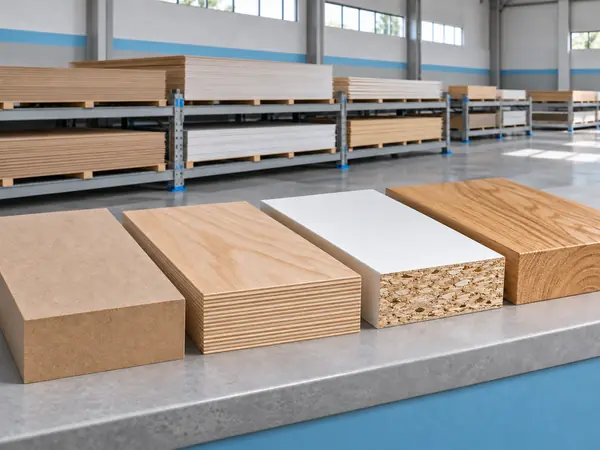
Request a quotation for Project-site material deliveryFor MDF boards intended for cabinets or internal doors, send fabrication drawings showing finished thickness, dimensions, piece counts, drilling positions and exposed edges. Distinguish raw from faced board and specify the moisture-resistance grade appropriate to the installation; a vague 'waterproof' label does not replace edge protection. Request manufacturer data for density, emissions and thickness tolerance. Compare board price alongside cutting, edge-banding, transport and waste. On delivery, check flatness, corners, swelling and batch identification before releasing boards to the workshop.
Request a quotation for MDF supplyNatural timber for doors, frames or shelves should be ordered by species, grade, cross-section and length, with the intended indoor or outdoor exposure stated. Provide a parts drawing and grain direction for visible components. Ask how the timber was dried, its measured moisture content, storage conditions and any treatment relevant to the job. Compare usable finished volume rather than the nominal load alone. Inspect for bowing, splits, problematic knots and incorrect sections; proposed species substitutions need design or client approval before cutting.
Request a quotation for Natural timber supplyStart a plywood order with its purpose: cabinet backing, furniture carcasses, temporary formwork or a moisture-exposed application require different face grades and bonding systems. Specify sheet thickness, dimensions, quantity and visible-face orientation. Request the supplier's documented grade and bond classification rather than relying on the label 'marine'. Compare cutting, delivery and expected offcuts as well as sheet price. Inspect edges for core voids or separation, sample thickness across the batch and reject sheets showing warping or damaged corners.
Request a quotation for Plywood supplyFor melamine-faced boards in wardrobes or offices, provide a cutting schedule stating core material, board thickness, both face finishes, décor code, grain direction and part numbers. Supply an approved physical sample and specify matching edge-band colour, thickness and sheen. Compare quotations for boards, cutting and edge-banding together, rather than per-square-metre board cost alone; check whether adjacent parts can come from a consistent batch. At receipt, inspect face colour, scratches and chipped edges, and verify finished cut sizes before hinge drilling.
Request a quotation for Melamine board supplyAn HPL order for a worktop, door or wall must distinguish thin laminate bonded to a substrate from compact laminate panels of a different structural thickness. Provide surface dimensions, cut-outs, edge details and any required bending radius, plus finish code, cleaning needs and moisture exposure. Request thickness, adhesive and compatible substrate information from the manufacturer. Compare the full installed-material package, including edge finishing, cutting and waste. Inspect sheets under even lighting for cracks or scratches and match décor and batch codes before fabrication.
Request a quotation for HPL board supplySupply a joinery fittings schedule with door and drawer dimensions, approximate leaf weights, opening angles, drawer travel and available clearances. Separate door hinges, drawer runners, handles and lift mechanisms, and identify any soft-close or corrosion-resistance requirement. Compare exact part numbers, rated loads, published cycle performance, mounting accessories and warranty terms—not a generic description such as 'premium hinge'. Count bases, screws and handed components on delivery, and trial-fit a sample assembly before approving the full order.
Request a quotation for Carpentry hardware supplyBoard cutting and preparation requires more than supplying raw sheets. Submit a numbered cutting list with each part's length, width, thickness, board type, grain direction, edge-banding and drilling positions. Specify whether dimensions are final after edging, acceptable tolerances and the delivery point. Ask the workshop for its cutting layout and policy for usable offcuts; compare cutting, drilling, packaging and transport separately from raw board cost. At collection, match part labels to the list, measure representative long and short pieces, and check edge straightness and surface chipping.
Request a quotation for Board cutting and preparation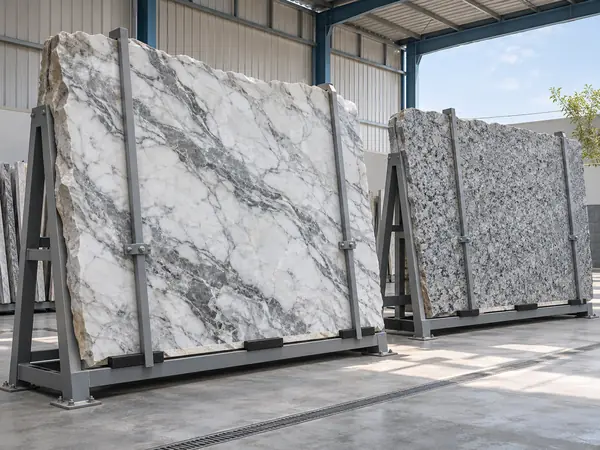

Specify natural marble against a layout showing each application, slab dimensions and required thickness rather than selecting from a colour photograph. Veining and variation between slabs are inherent, while stair treads, floors and wall cladding call for different finishes, slip characteristics and fixing methods. Ask for photographs and batch references of the actual slabs, a vein-matching and cutting layout, expected waste, edge finishing and delivery arrangements. Compare net-area pricing against whole-slab purchasing including offcuts and transport. Before installation, inspect cracks, corners, thickness and correspondence with the approved slabs.
Request a quotation for Natural marble supplyGranite should not automatically be substituted for marble: surface wear, staining, moisture, heat exposure and intended use matter. Supply dimensions for floors or counters, cut-out positions, edge profiles and finish, and request a physical sample showing grain, colour and thickness. Quotations should distinguish raw material, cutting, finishing, transport and lifting to the installation floor, and explain natural variation between batches. At delivery, check slab identification, dimensions, the specified polished or textured finish, and hairline damage near edges.
Request a quotation for Granite supplyCustom marble cutting requires a dimensioned shop drawing checked against finished site conditions, not rough measurements taken before adjacent finishes are complete. List pieces, grain direction, slab thickness, saw-kerf allowance, openings, corners and edge profiles. Have the workshop approve a cutting diagram before production and agree who pays for breakage or recutting caused by measurement discrepancies. Receive numbered pieces, measure lengths and diagonals where relevant, and inspect straightness and finished edges before dispatch to site.
Request a quotation for Custom marble cuttingGrinding and polishing can address superficial scratches and dullness, but cannot by itself correct deep fractures, subsidence or moisture beneath a floor. Provide side-lit photographs, floor area, details of staining, open joints and earlier treatments. Agree a small trial area to establish abrasion stages and stone-compatible polishing products, together with protection of doors and walls and control of slurry and dust. Compare joint repairs, polishing stages and final protection in each quotation. Inspect the dry floor for consistent sheen, swirl marks and unsuitable slipperiness.
Request a quotation for Marble grinding and polishingBefore laying marble flooring, survey substrate flatness, door thresholds and drainage levels as well as the net floor area. Provide a layout identifying grain direction, cut-piece distribution, joints and transitions; specify slab thickness and an installation system suitable for the project design. Separate substrate preparation, any required waterproofing, cutting, laying, grouting and post-installation protection in the quotation. At handover, check levels, joint alignment, bond and visual consistency with the approved setting-out plan; significant unevenness should not be concealed by polishing alone.
Request a quotation for Marble floor installationMarble wall or façade cladding must be priced against cladding height, slab size and weight, supporting wall construction and the proposed fixing system. Attach elevations, opening and corner details and junctions with windows. Request an approved fixing design addressing anchors, movement joints and water management appropriate to the location. The quotation should allocate responsibility for design, supply, lifting, access equipment and installation. Heavy slabs must not rely on an unsuitable adhesive-only arrangement. Inspect joint alignment, secure fixing, protected edges and water-shedding details at handover.
Request a quotation for Marble wall and facade installationMarble restoration begins with diagnosis: penetrating stain, chemical etching, chipped edge, crack or loose slab each needs a different remedy. Photograph the damage beside a scale and disclose cleaners used and any suspected moisture source. Request an inspection that establishes whether repair is feasible or replacement is necessary. Compare resin filling, consolidation, grinding and replacement in terms of achievable appearance and colour variation; avoid acidic or stone-incompatible treatments. Accept the repair after checking bond, surface feel and appearance in natural light.
Request a quotation for Marble maintenance and treatmentKitchen worktop fabrication should begin with an approved surface material, cabinet layout and appliance schedule, not a wall-length estimate. Take final site templates after the cabinets are installed and levelled. Show depths, overhangs, sink and hob openings, seams and any natural-stone vein direction on a numbered fabrication drawing. Specify actual material thickness, edge profiles and supports for projections and corners. Compare workshop quotations for templating, cutting, finishing, reinforcement, transport and breakage liability; establish who pays for remaking pieces after a measurement error. Before dispatch, match numbered parts to the drawing and inspect openings, edges and colour consistency.
Request a quotation for Kitchen countertop fabricationInstalling a prefabricated kitchen worktop is distinct from making it: accurate pieces can still fail on uneven cabinets or out-of-square walls. Survey support levels and the route for carrying slabs into the room, and agree whether removal of existing sinks or appliances is included. The quotation should identify lifting, fixing, compatible sealants, wall junction treatment and who will reconnect plumbing and appliances through appropriately qualified trades. At handover, check stability, unsupported overhangs and concentrated loads near corners. Carefully test the sink perimeter for leakage without flooding the cabinets, and record scratches or raised seams.
Request a quotation for Kitchen countertop installationFabricating a marble vanity requires a dimensioned drawing showing unit width, depth, finished height and whether the basin sits above, below or within the top. Provide the actual basin model and cutting template, tap position, trap and supply outlets, and drawer clearances so plumbing does not collide with the cabinetry. Specify stone thickness, visible edge treatment, basin support and stain-care guidance appropriate to the selected stone. Compare fabrication separately from installation, plumbing, mirror and cabinet work. Inspect symmetry, openings, polished edges and basin fixing; then test drainage, leaks and access for future maintenance.
Request a quotation for Marble basin fabricationCutting sink and appliance apertures can ruin an entire slab if dimensions are wrong. Use the manufacturer's template, exact model number and ventilation, clearance and fixing instructions rather than dimensions inferred from an advert. The workshop drawing should show distance to slab edges, nearby seams, underside supports and natural-stone veining. Ask which cutting process suits the material, how internal corners are finished to reduce stress concentrations and who bears the cost if an appliance changes. Dry-fit the unit before permanent fixing and inspect clips, pipe clearance and the surrounding slab for hairline cracks.
Request a quotation for Basin and appliance cut-outsQuartz worktop installation requires the actual engineered-stone product and manufacturer information, not merely a colour name. Supply a drawing of runs, cut-outs, overhangs, slab thickness and proposed seams, taking care with seams near stressed openings and with support beneath appliances. Heat resistance, cleaners and installation requirements vary by product, so request written manufacturer guidance. Compare cutting, edge finishing, bonding, lifting, support and warranty as a complete package rather than the slab price alone. Check seam flatness, colour continuity, intact corners and stable support, and avoid polishing or cleaning methods the manufacturer does not approve.
Request a quotation for Quartz installationLarge-format porcelain worktop slabs need careful handling and cutting plans because edges and apertures can be vulnerable before installation. Provide a final drawing of cabinets, hob and sink, slab thickness and edge profiles; survey doorways and turning space along the carrying route. Ask the fabricator about lifting frames, support during cutting, the approved substrate and support system, and methods for forming seams and mitred edges. Quotations should assign responsibility for breakage, replacement, cutting, fixing and protection from later trades. Inspect the surface under angled light, especially around openings and edges, for fine cracks or chips, and confirm level, secure seating before handover.
Request a quotation for Porcelain surface installationWorktop repair starts by identifying the material—natural marble, granite, engineered quartz or porcelain—because stain and scratch treatments are not interchangeable. Send overall and close-up photographs with a scale, note proximity to water or heat, cleaners previously used and whether the defect is a scratch, crack or failed seam. Request a discreet test where feasible, and a realistic statement of colour and gloss matching and when replacement is safer than filling. Compare spot repair, resealing seams and partial replacement for material compatibility, time and warranty. Inspect the cleaned, dry surface, seam adhesion and sharp edges; do not permit abrasive resurfacing on a product that cannot tolerate it.
Request a quotation for Surface maintenance and repolishing
For a bathroom, kitchen or floor order, start with a drawing that separates wall from floor areas and marks doorways, pipe penetrations and drains. Net floor area alone will not cover cuts and spare tiles. Specify the product code, actual dimensions, grade, finish and edge colour, and obtain the manufacturer's guidance on suitable applications, adhesives and joints. Compare suppliers by box coverage, number of cartons, cutting allowance, delivery, unloading and the policy for returning unopened cartons. On arrival, match shade and production batch references across boxes and inspect samples from several cartons for cracks, warping and colour variation before installation starts.
Request a quotation for Ceramic tile supplyLarge porcelain formats can require different transport and handling from ordinary tiles. Supply the slab dimensions, thickness, quantities, access route and intended location, including whether the area is wet or outdoors. Request the manufacturer's product data for water absorption, finish and slip suitability rather than assuming all porcelain works outside. Ask for separate prices for material, protective packaging, lifting, delivery and anticipated cutting waste. At handover inspect corners, flatness, batch markings and damaged cartons, and record any transit damage before signing the delivery note.
Request a quotation for Porcelain tile supplyBegin by establishing whether the paving will carry pedestrians only or occasional vehicles, what substrate exists and where rainwater drains. Provide an area drawing with levels, entrances and falls. Ask for a physical sample with a suitable wet-surface texture, relevant load suitability and the supplier's installation recommendations. A lightweight garden tile is not automatically suitable for a driveway. Compare thickness, dimensional tolerances, edging pieces, cuts and delivery as well as the base price. Inspect a sample from each batch and confirm consistent texture, colour and intact edges before stacking the delivery safely.
Request a quotation for Outdoor tile supplyTile cutting is a separate scope from supply and laying, particularly for pipe holes, corners and narrow pieces around doorways and columns. Submit a numbered laying plan with the length and width of each piece, pattern direction, hole centres and diameters, material and thickness. Cutting a large porcelain slab requires different handling from ordinary ceramic tile. Agree on the cutting method, exposed-edge finish, tolerances and who pays for breakage of customer-supplied material. Compare per-cut or linear-edge charges together with transport, packing and recutting. Receive numbered pieces and dry-fit critical shapes before bonding.
Request a quotation for Tile cutting and preparationBefore tiling, check that the substrate is sound, sufficiently level and dry, and that bathroom waterproofing and plumbing tests have been completed; new tiles should not conceal an unresolved leak. Provide wall and floor measurements, the laying pattern, tile size, drains and thresholds. State whether removal of old finishes, substrate repairs and skirting are included. Compare quotations for the adhesive system appropriate to the tile and base, joint widths, grouting, protection and movement joints. At handover check alignment, adhesion and absence of significant voids, and test drainage falls in wet areas before accepting the work.
Request a quotation for Ceramic tile installationPorcelain installation, especially in large formats, requires careful substrate levelling, planned joints, suitable lifting equipment and controlled adhesive coverage. Ask the installer to survey the base and specify the adhesive and bedding method according to the product instructions, including the handling and levelling tools. Quotations should distinguish cut-outs, corner work, breakage allowance, substrate preparation, movement joints and grouting. Inspect edges under raking light for objectionable lippage or chips, confirm stable bedding and clean joints, and respect the stated curing time before using the floor.
Request a quotation for Porcelain tile installationSkirting protects the floor-to-wall junction, but it should be measured after the finished floor is in place. Supply perimeter lengths, the agreed height, door and cabinet termination points, and photographs of internal and external corners. Choose between factory-made skirting and strips cut from matching tiles, including the exposed top-edge finish. Compare material, cutting, corners, adhesive and top-joint sealing as separate items; uneven walls can affect the result. At handover check a consistent top line, secure fixing, aligned joints and the absence of sharp ends or open gaps.
Request a quotation for Skirting supply and installationIllustrative scenes help explain the work; they are not photos of a listed company or a specific local project.


Choose a service and describe your requirements. WhatsApp opens with the information ready for your review; no provider availability or price is implied.