Biet Al Reef customer service
Tell us your location and what you need. Our team can help you prepare your request and check available options.
Find construction equipment rental companies in Al Dhait North for scaffolding, cranes, excavators and small tools, alongside factories and project material transport services. Compare specifications, rental periods and quotation requirements. For Al Dhait North, Ras Al Khaimah, describe the property, required work, access and measurements before requesting a quotation. For factories, equipment and machinery hire in Al Dhait North, Ras Al Khaimah: In Al Dhait North, villa or extension quotations need clear plot information and work st

SERVICES FROM PUBLISHED COMPANIES
Confirm the exact scope and appointment with the company.
Tell us your location and what you need. Our team can help you prepare your request and check available options.
Review each service scope and prepare a quotation enquiry with Biet Al Reef customer support, even where no company is listed. Images are illustrative.
Scaffolding hire should not be priced solely by the number of frames. Provide façade photographs, working height, length and access points, and specify whether the task is painting, cladding or repair. Establish who plans, erects and inspects the scaffold, how bases are supported and how edges and residents' routes are protected. Compare hire duration, transport, erection, alterations and dismantling; require a documented pre-use inspection of platforms and guardrails.
Request a quotation for Scaffolding rentalFor lifting an AC unit or heavy panels, obtain a reliable load weight, dimensions, centre of gravity, landing position and horizontal lifting radius. Photograph access, standing ground, overhead cables and other obstacles. The crane must be assessed against its capacity at the actual radius, not its advertised maximum. Compare operator, rigging, lift planning and waiting charges, and verify inspection records and any site-specific permissions before lifting.
Request a quotation for Crane rentalAn excavator for foundations or service trenches needs a plan showing length, width, depth, access and spoil-storage location. Never assume the ground is clear of buried cables or pipes; existing utilities and protective measures must be checked first. Compare machine size, attachments, spoil removal, operator, fuel and mobilisation. Survey completed levels and boundaries and record damage outside the agreed excavation.
Request a quotation for Excavation equipment rentalA plate compactor for a narrow trench is not interchangeable with a roller for an open area. Specify fill material, layer thickness, working area and proximity to walls or buried services. Ask the project engineer to define the compaction criteria and any required testing rather than assuming a fixed number of passes. Compare machine access, fuel, operator and transport, and accept documented test results where specified.
Request a quotation for Compaction equipment rentalA hired mixer can suit limited batches of mortar or concrete once volumes and mixing requirements are defined; it is not automatically a substitute for specified ready-mix structural concrete. State batch size, water and power supply, discharge location and washout arrangements. Compare drum capacity, cycle time, delivery, fuel and cleaning obligations. Check guards, drum condition and operation before accepting the machine.
Request a quotation for Mixer rentalFor concrete cutting equipment, distinguish a chased groove, circular core and full-depth saw cut, and supply the element thickness, dimensions and access points. Reinforcement and concealed services must be assessed, with structural implications reviewed where necessary, before cutting. Compare cutter capacity, blade type, cooling, slurry capture and site protection. Check final dimensions, edges and waste removal at handover.
Request a quotation for Concrete cutting equipment rentalFor equipment hired across several project phases, maintain a plant schedule linking each item to its task, arrival and return dates, power or fuel requirements and storage area. Compare daily or monthly hire separately from transport, operator, insurance, servicing and breakdown downtime. Photograph serial numbers, condition, meter hours and accessories on delivery; agree how faults and returns will be recorded to prevent billing disputes.
Request a quotation for Project equipment rentalBefore selecting a temporary generator, prepare an equipment load schedule showing running demand, motor starting loads and any voltage-sensitive devices. Provide photographs of the connection point, proposed generator position, cable run and daily operating hours. Ask for the continuous kVA rating under the intended conditions, fuel type and consumption, noise output, earth-leakage protection and a safe connection and earthing arrangement by a competent person. Compare fuel, refilling, servicing, transport and breakdown replacement separately from hire. Record meter hours at handover and test voltage under a suitable load; never operate the generator indoors or beside ventilation openings.
Request a quotation for Generator rentalAn unspecified 'cleaning machine' is not enough: distinguish tiled floors, delicate stone, carpet, wet extraction and construction dust. Supply photographs of the contamination, floor area in square metres, door and lift clearances and available water and power. Compare a scrubber-dryer, carpet extractor and industrial vacuum for the actual surface, including brushes, filters, approved chemicals and collection charges. Inspect hoses, tanks and suction operation, then trial the machine on a small inconspicuous area to avoid finish damage. Photograph its condition and accessories before return.
Request a quotation for Cleaning equipment rentalStart with the pneumatic tool: required pressure in bar alone is insufficient without its actual airflow demand in litres per minute at operating pressure and duty cycle. Provide the tool specification, hose length, work location and available power. Compare piston and rotary-screw compressors by delivery, tank capacity, noise and moisture separation, and ensure hoses and fittings have the correct pressure rating. State who pays for power or fuel, oil, transport and breakdowns. On delivery check the gauge, safety valve, condensate drain and leaks; never exceed the tool's rated pressure.
Request a quotation for Air compressor rentalPrepare a task-specific tool list: masonry drill, driver or angle grinder, identifying the material, thickness, hole diameter or required disc. Photograph the work area and state whether mains power is available, batteries are needed, or concealed services and dust are concerns. Compare hire of the tool separately from blades, bits, batteries and chargers, and clarify fair-wear versus damage charges. Check guards, cables and switches, then test the tool without load before accepting it. Never fit an accessory whose speed rating or material suitability does not match the tool.
Request a quotation for Power tool rentalFor welding-machine hire, identify the metal, thickness, joint and whether stick, MIG or TIG welding is intended; consumables and gas arrangements differ. Supply site photographs, ventilation conditions, electrical capacity and proximity to combustible materials. Obtain an itemised quote for the machine, leads, electrodes or wire, gas cylinder, regulator and protective equipment. Establish who supplies a competent welder and fire watch where needed. Inspect cable insulation, earthing and gas connections, and trial settings on suitable scrap. Hiring a welder does not itself authorise hot work at a site.
Request a quotation for Welding equipment rentalTo size a water pump, identify the water source, sediment content, estimated volume, elevation difference and discharge hose length and diameter. Photograph the pit or tank, hose route and proposed discharge point, and describe the available electrical supply and water protection. Request a pump performance curve showing flow at the required head; motor power alone is not a meaningful comparison. Agree on suction strainer, non-return valve, hoses, cables and any standby arrangements. Check flow, leaks and dry-running protection on handover, and verify that discharge goes to an appropriate, authorised location where required.
Request a quotation for Water pump rentalSelect garden equipment by task: mowing lawn, trimming hedges, pruning branches or clearing leaves require different machines. Supply garden area, photographs of paths, slopes and vegetation height, noting nearby children, vehicles and glazing. Compare mower, trimmer and blower hire by power source, battery or fuel provision, blades, guards and transport. Inspect blades, safety interlocks, stop switch and unusual vibration before use, and clarify green-waste disposal. Record equipment condition and accessories on return.
Request a quotation for Garden equipment rentalAn aluminium extrusion order starts with a dimensioned section drawing showing cavities, screw ports and gasket seats, not just a colour reference. Provide cut lengths, specified wall thicknesses, intended application and batch quantity, distinguishing a catalogue profile from a new die that may involve tooling charges and a minimum production run. A profile with similar outside dimensions may not accommodate the required hardware or structural detailing. Request a physical sample, alloy and finish information, dimensional tolerances and traceable batch identification. Compare tooling, scrap allowance, cutting, protective packing and delivery separately. At receipt, sample-check straightness, critical dimensions, wall thickness and coating defects across the batch rather than examining only one convenient piece.
Request a quotation for Aluminium profile manufacturingBefore a factory makes doors and windows, provide a numbered opening schedule with finished opening measurements, handing, glazing, locks, hinges and sill details. Elevation photographs do not establish frame depth or finished floor levels, so the fabrication dimensions should be checked on site before cutting. Request shop drawings identifying the frame system, seals, drainage routes and movement allowances, and clarify whether installation, perimeter sealant and making good are included. Compare bids using the same profile specification and serviceable hardware rather than a simple price per square metre. On delivery, match labelled units to the schedule and inspect squareness, sash operation, glass condition and drainage provisions before accepting the batch.
Request a quotation for Door and window manufacturingToughened glass must be cut, drilled and edge-finished to its final geometry before the tempering process; it cannot normally be resized afterwards. Submit drawings showing hinge and handle holes, edge distances and final use. Confirm with the responsible designer whether the application requires laminated or another engineered safety-glazing assembly rather than assuming tempering alone is sufficient for a balustrade or façade. Request glass type, thickness, edge treatment, identification markings and relevant test information against the agreed specification. Compare processing, drilling, handling frames and transport, not just glass area. Check each pane for size, edge damage, scratches and handling defects before signing delivery documents.
Request a quotation for Tempered glass manufacturingFactory preparation of a glazed façade requires coordinated elevations and fabrication drawings that number every pane and identify framing, movement joints, anchors and drainage details. Verify as-built dimensions and provide the loads and performance requirements established by the responsible façade designer, particularly for large or elevated installations. Ask for a sample assembly to confirm compatibility among glazing, gaskets, profiles and fixings. Sequence packing and deliveries to match installation stages instead of storing fragile panes unnecessarily on site. Compare glass build-up, processing, accessories and agreed factory checks. At handover, reconcile pane tags, edge protection, packing lists and inspection records; factory acceptance does not replace inspection of the installed façade.
Request a quotation for Glass facade preparationFor office or retail partitions, send a layout identifying each run length and height, door position and swing, plus nearby power, lighting and air-conditioning services. A visually separating screen and an acoustically rated enclosure have different glass, seal and junction requirements, which must be defined before quotation. Specify how frames meet the floor, existing walls and suspended ceiling, and who is responsible for moving services or repairing disturbed finishes. Compare the actual framing system, reinforcement, fittings and installation scope rather than glazing area alone. Review a trial assembly for alignment and hole locations, then check stability, door operation and perimeter seals after installation.
Request a quotation for Partition manufacturingGlass supply may mean raw stock for another workshop or finished, cut-to-size panes for a particular project; these are different orders. Supply a cutting list with width, height, thickness, quantity, glass processing, colour and any coating or laminate, including orientation of functional coatings where relevant. Ask for product documentation and suitability for the designed use, particularly at doors, façades and safety-critical locations. Compare cutting yield, breakage arrangements, racks, protective packaging, transport and replacement lead time. On receipt, reconcile labels and packing lists, inspect corners and surfaces for damage, and measure representative pieces before signing acceptance.
Request a quotation for Glass supplyRepeated project orders require version control as well as production capacity. Build a schedule tying every door, window or glass pane to its building, floor and opening number, with approved drawings and required site dates. Agree on a first-article sample and trial installation before releasing full production, plus a formal method for communicating dimensional revisions so later batches are not made from obsolete drawings. Compare factories on demonstrated output capacity, inspection stages, packing, phased deliveries and replacement of rejected units. For each batch, sample-check dimensions, count labelled items and reconcile inspection records; a delivery invoice alone does not establish technical acceptance.
Request a quotation for Project order fulfilmentStone cutting starts with the intended installation, not just slab dimensions. Specify natural or engineered stone, thickness, finish, vein orientation and the destination of each piece. Give the workshop a numbered cutting schedule with final dimensions, joint allowances, openings and exposed-edge treatments. For adjacent pieces, request a photographed slab layout before cutting so the vein sequence and waste can be reviewed; changes to that layout should be agreed rather than assumed. Compare quotations for raw slab allowance, waste, appropriate saw or waterjet work, edge finishing, packaging, transport and responsibility for recutting incorrect pieces. At receipt, measure sample pieces, inspect square corners and straight edges, check for hairline cracks and match the labels to the installation drawing.
Request a quotation for Marble and stone cuttingA stone kitchen countertop should be templated after cabinets are installed and levelled, rather than fabricated solely from preliminary design dimensions. Confirm material and thickness, support for overhangs, sink and hob cut-outs, taps and service penetrations; clearances around appliances must follow the relevant manufacturers' requirements. Agree seam positions, vein matching and edge profiles, and distinguish fabrication from delivery, lifting, installation and sealing in the quotation. Ask for a shop drawing and a physical finish sample, including terms for remaking damaged or wrongly sized pieces. Inspect cut-outs and polished edges before dispatch. After fitting, check levels, joint alignment, secure support and the absence of unsupported voids or chipped edges.
Request a quotation for Kitchen countertop fabricationStone stair treads require an as-built stair survey showing the width, going and rise of each step and the dimensions of landings. Do not assume every existing step is identical: measure individually, and specify exposed nosings, edge profiles and a suitable slip-resistant finish. The factory needs piece numbers tied to positions, vein direction, thickness and any grooves or contrasting inserts required by the design. Compare cutting, finishing, replacement pieces, packing and whether installation is included. At delivery, match each label to its position and inspect dimensions, corners, colour variation and damaged edges. After installation, check consistent finished levels and secure seating; stone fabrication alone does not establish the structural or dimensional safety of the staircase.
Request a quotation for Staircase fabricationFaçade stone preparation depends on a separately engineered fixing design, not merely decorative slab cutting. Supply current elevation drawings, panel IDs, openings, levels and vein layout together with the attachment details, movement joints and loads established by the responsible designer. Hole and slot positions, anchors and brackets must be resolved before machining; improvised on-site changes can compromise the stone. Compare factories on thickness tolerances, edge finishing, traceability, sample checks and packaging suitable for lifting. Request an initial stone-and-fixing sample, then inspect delivered panel IDs, drilling locations, edges and cracks. Delivery of fabricated panels is not approval of the structural fixing design or site installation.
Request a quotation for Facade marble preparationFor carved or engraved stone, provide a scaled drawing or production file defining overall dimensions, carving depth, corner radii and the smallest detail to be reproduced. Raised relief, recessed engraving and through-cut patterns have different limitations, particularly on brittle stone. Request a trial sample in the actual material before approving the batch. Identify whether the feature is for an interior wall or an exposed location, and specify any surface treatment or concealed mounting points. Compare design preparation, machine programming, hand finishing, waste and replacement terms. On receipt, compare the approved sample with the finished pieces and inspect depth consistency, crisp edges, cracks and unwanted tool marks.
Request a quotation for Engraving and decorative workBefore polishing or repairing marble, establish whether the problem is a surface scratch, a penetrating stain, dullness or a crack; the remedy differs, and restoration of the original appearance cannot always be guaranteed. Photograph the condition under consistent lighting and identify the stone, existing finish and previously used cleaners. Ask for a discreet test patch to assess stain removers, fillers and grinding or polishing stages. Significant material removal should not proceed without considering levels and edge profiles. Compare quotations for protection of adjacent finishes, dust and wastewater management and each treatment stage, not area alone. Inspect the result in natural light, including joints, residual marks and any uneven edges, and record defects that cannot be corrected.
Request a quotation for Marble polishing and treatmentContractor stone orders need a controlled link between fabrication, delivery and site installation. Issue a piece schedule with unique IDs, installation locations, approved drawing revisions, material, thickness, finish, quantities and required delivery dates. Agree a first-piece sample and a revision procedure when openings change, so batches are not made to obsolete dimensions. Check the factory's approach to vein matching, pallet numbering, packing manifests and replacement of damaged or missing pieces. Compare quotations for waste, cutting, finishing, packaging, transport, payment milestones and rejection criteria. On each delivery, reconcile piece IDs and quantities against the purchase order and inspect samples from the batch before releasing them for installation.
Request a quotation for Contractor order preparationStart with the actual tasks and sizes: metric or imperial spanners, screwdriver profiles and any torque range that matters. Send a photo of the existing fitting or a size schedule instead of buying an oversized assortment. Compare steel quality, grip, replaceable components and warranty; occasional household use and repeated workshop duty are not equivalent. On delivery check jaw edges, straightness and the item count against the invoice, and try one representative fit without overloading the tool.
Request a quotation for Hand tool retailDescribe the material to drill or cut, its thickness, daily duty and available power before choosing a tool. A hammer drill is not a fastening driver, and a wood saw is not automatically suitable for metal. Provide site photos and state corded or battery preference. Ask suppliers to separate the body, batteries, charger, discs and guards in the quotation. Compare speed control, power, spare parts and servicing as well as price. Check serial numbers, accessories and safety guards, then perform a permitted no-load test before acceptance.
Request a quotation for Power tool retailSelect protective equipment against a defined hazard: falls, fine dust, chemical splashes, noise or flying particles. State wearer numbers, sizes and duration of exposure. Request manufacturer suitability data and applicable product documentation rather than assuming a label proves regulatory approval. A hard hat is not a face shield, and an ordinary mask may not control the identified respiratory risk. Compare fit, replacement intervals, expiry and instructions. Inspect straps, lenses, packaging and batch identifiers on receipt so the supplied items remain traceable.
Request a quotation for Safety equipment retailPlan the workshop workflow before buying machines: material entry, cutting, assembly, storage and safe circulation. Supply machine footprints, power availability, extraction needs and floor-loading information. Ask for installation, commissioning, operator training and spare-part terms, with lifting and delivery priced separately. Compare realistic output and operating accuracy rather than rated capacity alone. Acceptance should include guards and emergency-stop checks plus a documented trial on representative workshop material under safe conditions.
Request a quotation for Workshop equipment retailChoose a cleaning machine for the soil and surface, not simply its tank capacity. For hard floors assess brush width, water recovery and drying time; for upholstery assess extraction and detergent compatibility. Record water, power and wastewater arrangements and request a small trial on delicate finishes. Compare accessories, consumables, tank cleaning and service support. At handover inspect hoses, seals and brushes, run an appropriate cleaning or suction test and check for leaks.
Request a quotation for Cleaning equipment retailSupply the maker, machine model, serial number and part number where available, supported by clear photographs of the failed component and its location. Visual similarity does not establish matching voltage, dimensions, rotation or mounting points. Distinguish original and alternative parts in quotations and clarify returns for incompatibility. Compare delivery lead time, warranty and related consumables. Check codes, connectors and dimensions before installation, retaining packaging and invoices; safety-critical fitting and testing require an appropriately qualified person.
Request a quotation for Spare parts retailRecord running hours, symptoms, when the fault appears and previous maintenance, with safe photographs or video where useful. Request a diagnosis that distinguishes electrical, mechanical and maintenance-related causes before approving major replacement. The quotation should separate inspection, parts, labour and transport, with approval required for extra work. On completion request a service report identifying replaced components and tests performed, observe a safe functional test and confirm whether the original symptom is resolved and what the warranty excludes.
Request a quotation for Equipment maintenancePrepare a room-by-room inventory of large furniture, glazing, appliances and fragile possessions, photographing their condition before collection. Provide floor numbers, lift and doorway dimensions, carrying distance and truck parking arrangements. Clarify whether dismantling, packing and reassembly are included. Compare crew size, vehicle capacity, protective materials, damage liability and waiting charges. Number cartons without exposing sensitive details. At destination reconcile the inventory by room and inspect corners, surfaces and appliances before signing the handover.
Request a quotation for Home furniture movingAn office move requires a continuity plan as well as a furniture count. Inventory workstations, storage, printers, screens and records, identifying items to discard and windows for shutdown and reconnection. Agree who handles backups, confidential records and network disconnection; these are not automatically the mover's responsibility. Compare labelling, packing, route protection, lifting and out-of-hours rates. At handover reconcile workstation identifiers with the new layout, inspect furnishings and record missing or damaged items before closure.
Request a quotation for Office furniture movingPhotograph joints, matching panels and hinge positions before dismantling beds, wardrobes or desks; measure the destination room if the layout changes. Some flat-pack furniture does not tolerate repeated disassembly, so identify damaged boards and replacement fixings beforehand. Compare item labelling, wrapping, transport and readjustment, and specify separately whether scratch repairs are included. Keep fittings in labelled bags linked to each item. After reassembly test stability, door alignment and drawer travel, and account for all screws and panels.
Request a quotation for Furniture disassembly and reassemblyPacking methods should match the finish. Glass needs edge protection and separation; painted timber needs non-marking contact layers; textiles need clean covers appropriate to dust and moisture exposure. Provide item photographs and dimensions and explain whether packing is for short transport, long-distance haulage or storage. Ask the supplier to identify corner protection, wrapping layers, vehicle restraint and who removes packaging. Inspect finishes before wrapping and again after unwrapping, documenting any visible damage immediately.
Request a quotation for Furniture packingProvide approximate piece counts, dimensions and weights, floor levels, stairs and carrying distance from truck to destination. Crew numbers alone are insufficient when lifting aids, long items or fragile materials are involved. Compare supervision, handling equipment, hours, wall and floor protection and damage responsibility. Keep routes clear and use suitable equipment for loads that should not be lifted manually. At completion reconcile piece counts and document any loss or damage.
Request a quotation for Loading labour provisionCreate an itemised condition record with photographs before storage. State the intended period, piece dimensions and sensitivity to moisture or temperature. Ask how items are stacked, ventilated and protected from water, pests and unauthorised access; do not assume comprehensive insurance without reading its terms. Compare usable space, intake fees, partial retrieval, extensions and final delivery. Obtain a numbered receipt tied to each item or carton and its storage location. Reconcile the inventory and inspect wrapping and surfaces when collecting.
Request a quotation for Temporary storageAn inter-emirate move needs precise pickup and delivery locations, access windows, load volume and items requiring dismantling or lifting equipment. List appliances, furniture and fragile pieces and distinguish packing, temporary storage and transport-only services. Compare vehicle type, restraint methods and disclosed waiting, loading and stop charges; do not assume a guaranteed arrival time. Record condition before collection and agree a delay contact. Count cartons and items at delivery and note breakage or scratches in the handover record.
Request a quotation for Inter-emirate property movingFor construction-material haulage, provide each material type, quantity, approximate weight, package dimensions and unloading point. Bagged cement, long steel lengths and palletised blocks require different handling. Confirm lifting equipment, vehicle access and site delivery windows. Compare permissible payload, trip count, load protection and waiting or unloading charges. Protect goods from rain or movement as appropriate. At handover reconcile order numbers, pallet counts and weighbridge tickets where applicable, and record damage or shortages before the vehicle leaves.
Request a quotation for Building material transportTimber transport requires lengths, sheet dimensions, thicknesses and whether surfaces are unfinished or factory-finished. Long boards need adequate support to prevent bending; finished panels need protection from rubbing and moisture. Send packing photographs and access information for the workshop or site. Ask for vehicle type, securing straps, edge guards and offloading method. Compare liability for breakage, delay and waiting. Inspect corners, straightness and moisture marks on arrival and reconcile board counts and lengths with the packing list.
Request a quotation for Timber transportFor marble haulage, specify each slab's length, width, thickness, estimated weight and any openings or cuts that weaken it. Agree with the fabricator whether purpose-designed slab racks or protective packaging for finished pieces is required, with separation between faces. Confirm lifting equipment and the entry route at destination. Compare racks, restraint, stated insurance and breakage responsibility. Photograph faces and edges before loading; inspect for cracks and chipped corners and reconcile piece identifiers at delivery.
Request a quotation for Marble transportBefore transporting an excavator, compressor or other plant, provide its model, operating mass, dimensions, designated lifting points and whether it can move under its own power. Agree who secures attachments and moving parts and who checks trailer suitability and access. A generic photograph is not enough to choose transport. Compare loading, restraint, any required escort, arrival window and waiting charges. Record meter hours and external condition before loading and after unloading; inspect the machine before returning it to service.
Request a quotation for Equipment transportSeparate project waste into concrete and masonry, timber, metal, paint containers and materials needing special handling. Send photographs of quantities, skip position and truck access; do not combine incompatible waste or assume every receiving facility accepts it. Ask the haulier to identify the receiving destination, disposal method and available transfer records, verifying applicable requirements before making compliance claims. Compare skip size, trip count, loading and waiting fees. Retain any issued transfer or receipt documentation and inspect the cleared work area.
Request a quotation for Waste transportWhen booking project trucks, state material types, payloads, dimensions, anticipated trips and site access windows. Pricing may be per trip or hour, so identify driver, fuel, waiting, tolls and loading in writing. Check vehicle capacity, route suitability and load restraint. Compare minimum booking periods, trip records, breakdown replacements and delay arrangements. Approve daily logs showing arrival, departure and delivered quantities before reconciling invoices.
Request a quotation for Project truck provisionLoading and offloading are separate from transport and may need a forklift, crane or trained handling crew. Supply package weights, dimensions, lifting points and fragility, plus photographs of truck standing areas, dock height and internal carrying routes. Specify who supplies handling equipment, directs vehicle movement and protects floors and walls. Compare crew numbers, working hours, equipment and delay charges. On completion check stable stacking, clear exits and package counts, documenting any damage.
Request a quotation for Loading and unloading servicesReady-mix concrete orders start from the designer's approved specification: grade, pour volume, workability and pumping requirements, with a sampling and testing plan. 'Strong concrete' or an approximate volume is not a sufficient order. Supply the pour programme, access route and expected discharge window. Request mix documentation, supply sequence and late-load procedures. Compare unit rates, pumping, waiting, tests and successive deliveries. At receipt check batch tickets, times, volumes and sampling records against the approved inspection plan; do not alter the mix on site without appropriate approval.
Request a quotation for Ready-mix concrete manufacturingFor block and brick production, specify dimensions, type, intended use and density or strength requirements from project documents, together with quantities and expected wastage. Partition units and blocks for special wall requirements should not be compared on piece price alone. Request samples, product information, stacking and delivery details. Compare dimensional tolerance, breakage and replacement conditions. Count pallets and sample-check units for size, cracks and chipped edges on receipt, retaining batch details where provided.
Request a quotation for Brick and block manufacturingPrecast cement products include kerbs, paving units and custom elements with different drawings, dimensions and lifting or fixing details. Provide site plans, quantities, levels and required colour or finish, and approve a first article before repeated production. Compare moulds, tolerances, curing, storage, transport and damaged-piece replacement. Structural precast requires competent design review; an attractive sample is not design approval. At handover reconcile sizes and quantities, inspect cast-in fittings, cracks, surface defects and edges.
Request a quotation for Cement product manufacturingSupply of cement-based products needs a quantity schedule distinguishing concrete, blocks, paving and precast items, with specifications, destinations and required dates. Avoid a single undifferentiated price line for unlike goods. Agree phased deliveries, storage protection, unloading responsibility and replacement of rejected items. Compare minimum orders, unit prices, freight, lead times and return terms. At each delivery verify product labels, quantities and order identifiers, and record breakage or nonconformity before approving the invoice.
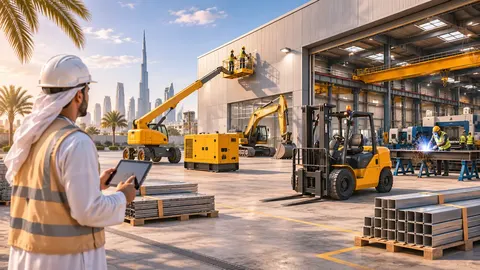
Request a quotation for Product supply for projectsIllustrative scenes help explain the work; they are not photos of a listed company or a specific local project.

Share the service details, measurements or available photos, and Weyaak will help structure and route the request by location and specialty.
For factories, equipment and machinery hire in Al Dhait North, Ras Al Khaimah: In Al Dhait North, villa or extension quotations need clear plot information and work stages. Review site storage, entry, shade and outdoor drainage. Specify capacity, transport, operator duties and safety. Confirm genuine service coverage and inspection requirements.

Customers searching for equipment rental in Al Dhait North should find your business here. Join Biet Al Reef and place your company where customers are already looking for your service.
 Areas in Ras Al KhaimahStart by location
 Browse companies by sectorApproved UAE sector guides
 Biet Al Reef MarketMaterials and products
 Guides and useful contentHelpful project resources
Choose a service and describe your requirements. WhatsApp opens with the information ready for your review; no provider availability or price is implied.